Outdoor AC fan running but not cooling? Track both sides of the system.
A spinning outdoor fan does not prove the AC is actually moving heat. If the vents stay warm or the house keeps gaining temperature, send what the indoor and outdoor units are doing before buying parts or forcing more resets.
Check from a safe distance whether air is moving at the vents and whether the outdoor fan is spinning. Then note whether the vent air feels cool or warm and whether the indoor temperature is holding or climbing. Those details are more useful than assuming the whole outdoor unit is working.
A running fan does not confirm the compressor.
The fan and compressor can behave differently. Tell Scott whether the outdoor unit sounds normal, unusually quiet, humming, buzzing, clicking, or repeatedly trying to start. Do not remove a panel, push the fan blade, or touch a capacitor, contactor, or wiring to test it yourself.
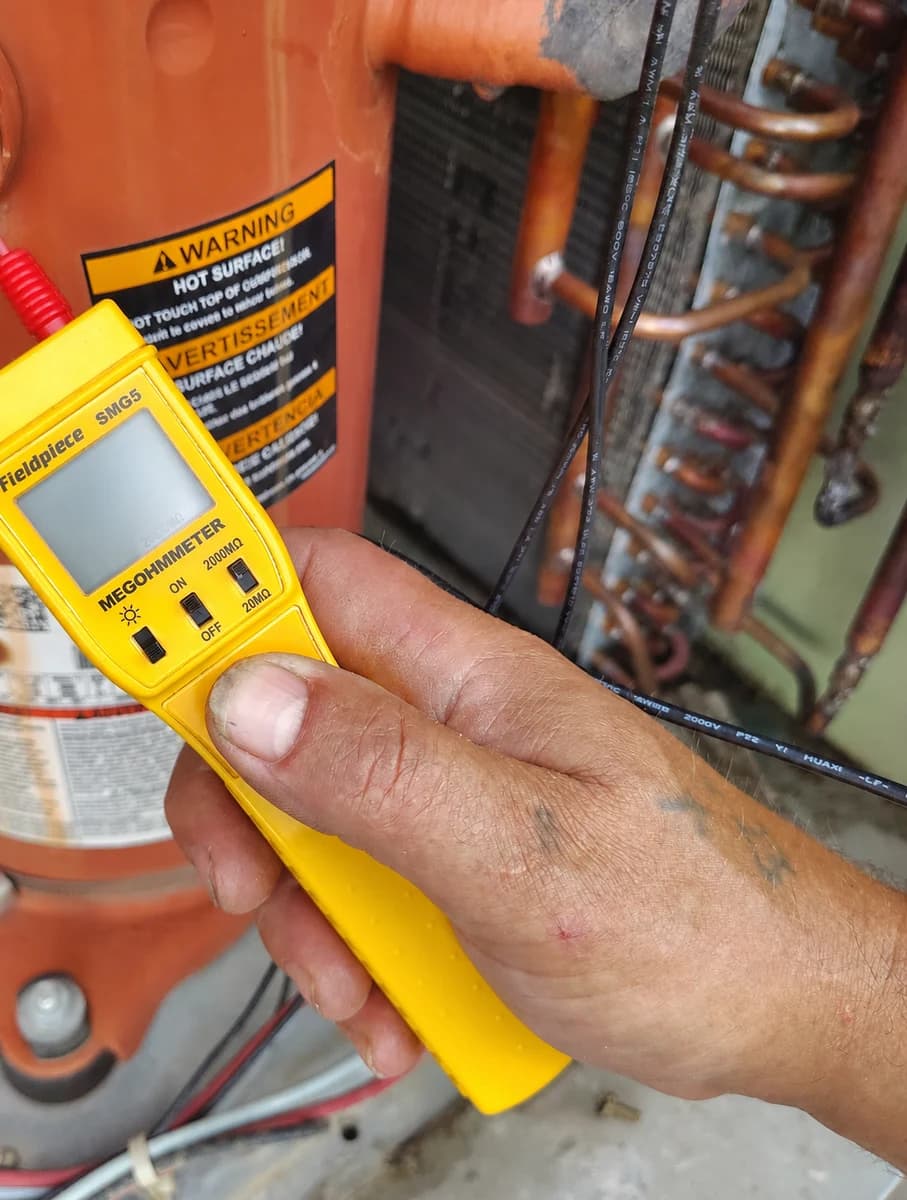
Technician-proficiency exampleThis authentic image shows a testing method from Scott's HVAC field experience. It is not a Civive customer visit, failed-component claim, diagnosis, repair outcome, or location-specific job.
Stop if it smells hot or trips a breaker.
Do not keep resetting the breaker or cycling the thermostat if the outdoor unit hums, buzzes, smells hot, or trips again. Shut the system off and text the symptoms. Repeated attempts can make an electrical or startup problem worse.
Warm-air symptoms with a spinning outdoor fan can overlap with compressor, capacitor, contactor, wiring, thermostat, coil, refrigerant, or airflow issues. The $95 Springfield Diagnostic gives Scott a real starting point before any repair price or parts call is discussed.