
Common clues homeowners notice
The indoor blower may still move air while the outdoor unit is silent, humming, buzzing, clicking, or trying to start and stopping. The house may get warmer even though the thermostat is calling for cooling.
Homeowner Guide
A weak or failed capacitor is one possible reason an outdoor AC unit hums, clicks, struggles to start, or stops cooling. The safer first step is to send clear symptoms and let the diagnostic confirm the cause.
The indoor blower may still move air while the outdoor unit is silent, humming, buzzing, clicking, or trying to start and stopping. The house may get warmer even though the thermostat is calling for cooling.
Capacitors, contactors, fan motors, compressors, wiring, drain safeties, and power issues can create overlapping symptoms. Replacing a guessed part without testing can miss the real problem or hide a bigger electrical concern.
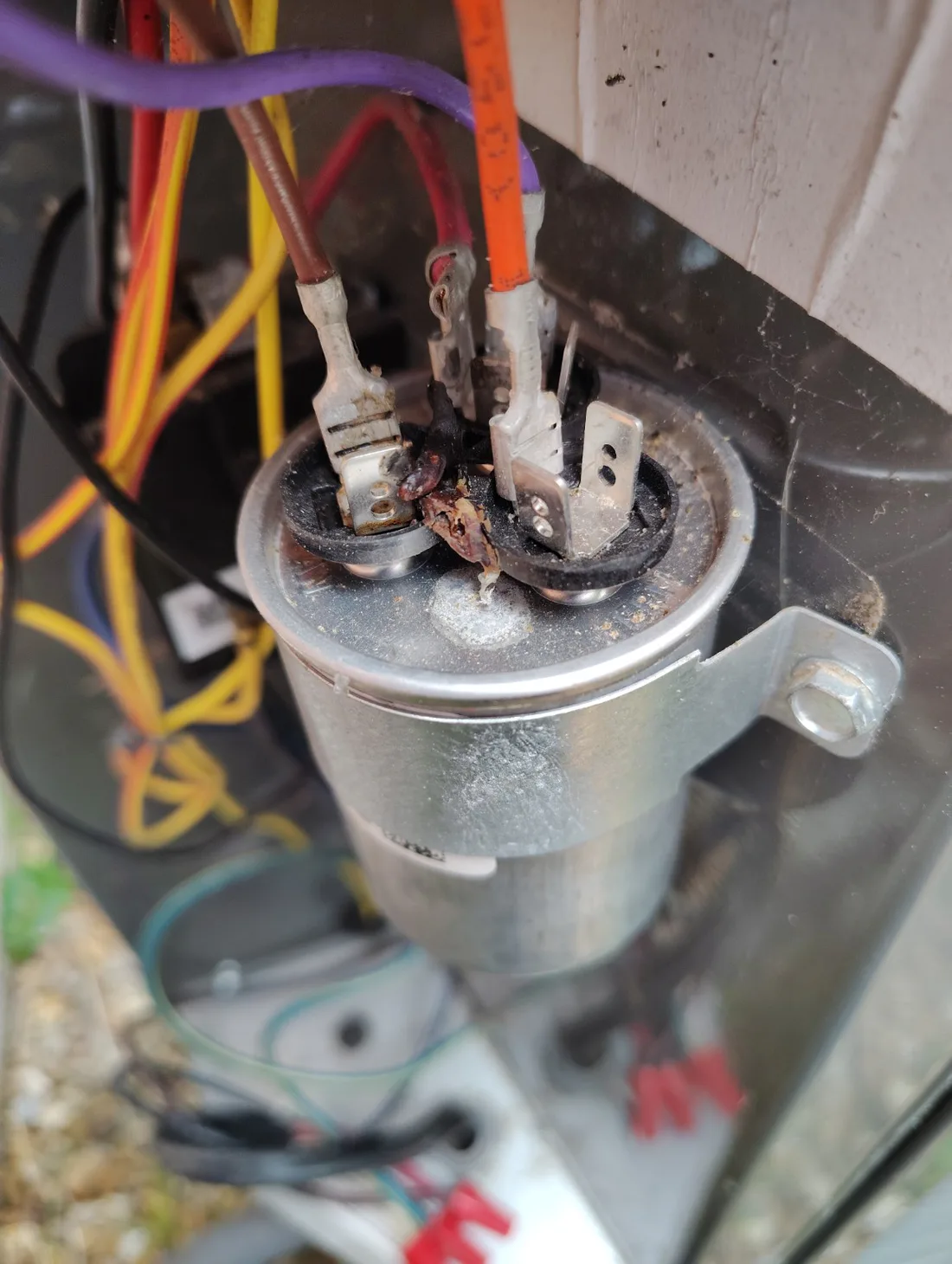
If the outdoor unit hums without starting, smells hot, trips a breaker, or keeps trying and stopping, do not keep forcing it through repeated resets. Shut the system off at the thermostat and request a diagnostic.
Read the breaker trip safety guideThe $95 Springfield Diagnostic should confirm whether the start/run components are the issue, whether the outdoor fan or compressor is being protected by another fault, and what repair price makes sense before work begins.
Read the diagnostic page